7 lessons his feed has been teaching him

By Marco Wagner
Last Updated July 18th, 2026
Summary: He didn't go looking for any of this. A feed learns a boy in about forty minutes, then feeds him more of whatever holds him, one video at a time, from people he trusts more than almost anyone.
None of it looks like much on its own. The pattern is the point. Here are the seven lessons it has been teaching him, and why not one of them would ever trip a content filter.
None of this is meant to scare you. Seeing the pattern clearly is what finally lets you reach him — calmly, and without a fight.
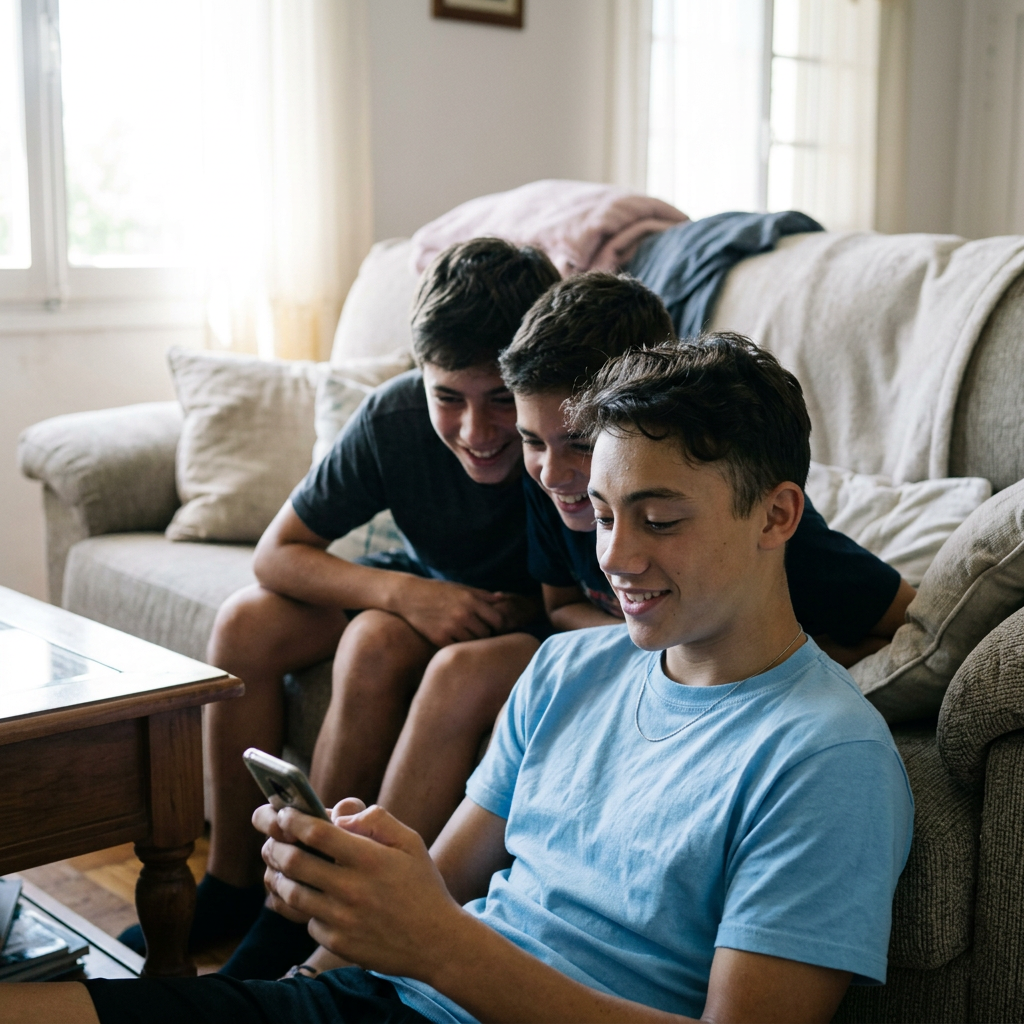
1. “That a girl's worth is her face, and her opinion is optional.”
It started as a joke he laughed at, then a rating, then a word: "mid." Creators who build audiences by scoring women taught him to see girls as things to rank before people to know. He'd never say it to your face. But it's there now, in how he talks about the girls at school, and about you.

2. “That kindness is weakness, and warmth is for losers.”
The feed sells him a version of manhood built on contempt: never care too much, never show softness, never be the "beta." Every video that mocks a sensitive guy is a small lesson that the parts of him you love most, the tenderness and the openness, are liabilities to hide.

3. “That school is a scam and he's the sucker for showing up.”
Creators who made money without a degree tell him the classroom is a trap for people too dumb to escape it. It flatters him. He's not failing, he's awake. So the homework slides, the grades slip, and the effort you're begging for now looks, to him, like proof he hasn't figured it out yet.
READ HIS FEED BEFORE THE NEXT SCHOOL TERM
He didn't choose any of this. It's coming from his feed — and you can finally see it.
A plain-English report of who's been shaping him — and the words to reach him. No app on his phone.

4. “That a man is only worth his money and his body count.”
Status, cash, cars, women as trophies. The feed hands him a scoreboard for his own life and tells him he's losing. A fourteen-year-old cannot win that game, so he gets anxious, or he gets hard, or both, chasing a definition of worth that was designed to keep him scrolling.
A WORD, BEFORE THE LAST THREE
If you're reading this with a knot in your stomach, take a breath. None of this is your fault, and none of it means he's a bad kid. He didn't go looking for any of it — he was a boy with a phone, and a system that learns faster than any parent could keep up with found what held him and gave him more of it. Good kids from good homes are in this exact stretch right now, in their millions. The point of seeing it isn't to blame him, or you. It's to be able to reach him.
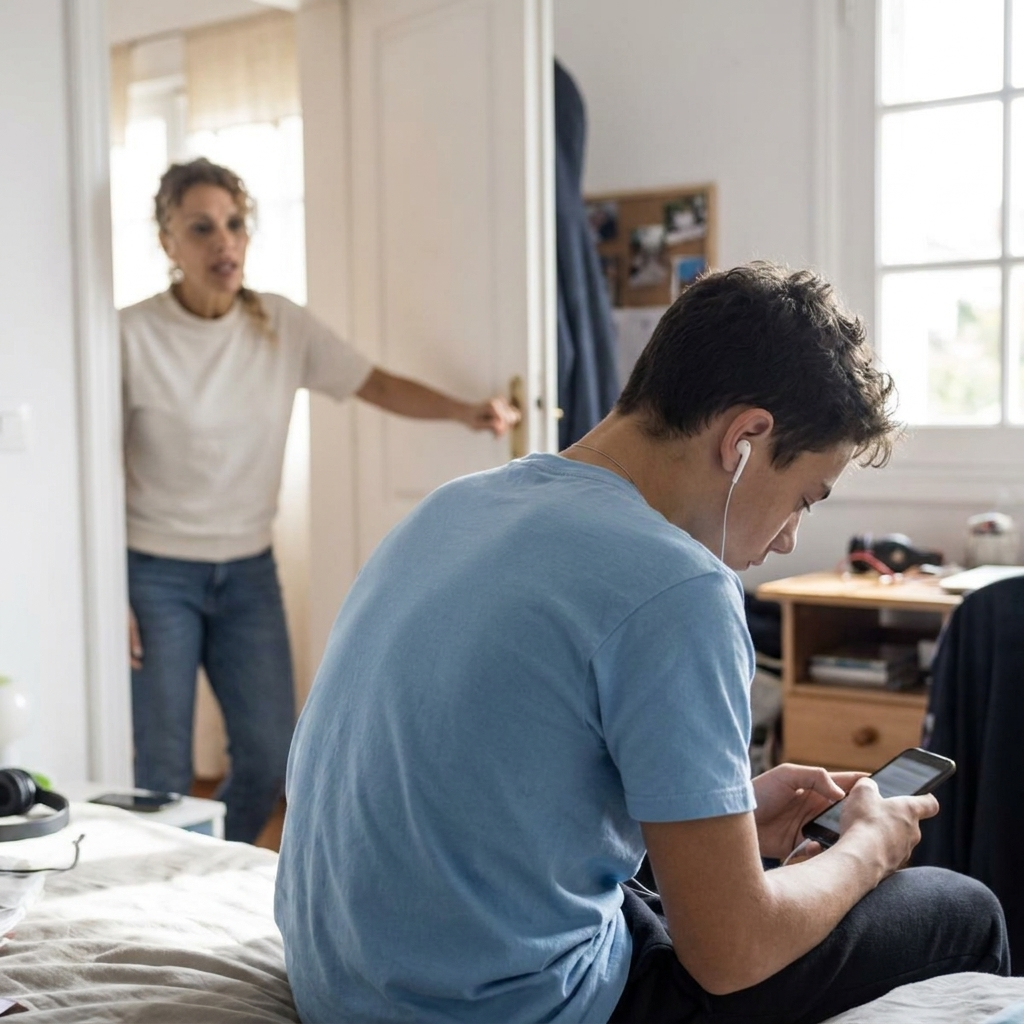
5. “That your advice is what ‘low-value’ people give.”
This is the one that isolates him. The creators don't just teach him what to think, they teach him to distrust you. Parents are "brainwashed," teachers are "cucked," anyone worried about him is "weak." Every time you try to reach him, the feed has already told him why not to listen.

6. “That anger is the only feeling he's allowed to show.”
Sadness, fear, confusion: the feed reframes all of them as weakness, and leaves him one acceptable emotion, anger. So the boy who used to cry to you now slams a door instead. It's not that he stopped feeling things. He was taught there's only one feeling a man is permitted.

I had no idea what he was actually watching. The report laid it out in a way I could follow, and it gave me the words to bring it up without starting a fight.

Reading it was uncomfortable. It was also the first time I felt like I understood what my son was dealing with instead of guessing at it.

It did not tell me to take his phone away. It told me what the feed had been teaching him, which turned out to be far more useful.
THE LESSON WAS IN HIS FEED
Every lesson you've just read left a trail in his feed. Wolense reads it back to you.
See the creators and the patterns behind the change — plus how to talk to him about it, without a fight. Nothing installed on his phone.

7. “That the only people who really get him live in his feed.”
Put the six together and you get the seventh: a boy who trusts strangers on a screen more than the people in his house. Not because you failed him, but because they had him for hours a day, every day, and you didn't even know their names.
Here's what ties all seven together: not one of them would ever trip a filter. No screen-time limit, no monitoring app, no check of his messages would catch a worldview taught one video at a time — because none of it is a bad word or a blocked site. It's been invisible to every tool you've been handed.
And he is not the exception. On a fresh teen account, this kind of content climbed from 13% of what the feed served to 56% in just five days.
Dr. Kaitlyn Regehr, University College London, 2024

NOT ANOTHER TOOL HE BEATS
The one read of his world he can't delete.
[spots] of [cap] spots left this week
A psychologist reads every report personally, so we only take a limited number of families each week.
See who's been in his ear, and get the words to reach him. Nothing on his phone to find, resent, or delete.
